
Trace Your Honey
Every jar of Honeycube tells a story. Enter the unique batch number found on your label to discover the origin, laboratory results, and harvest details of your honey.
A Natural Process
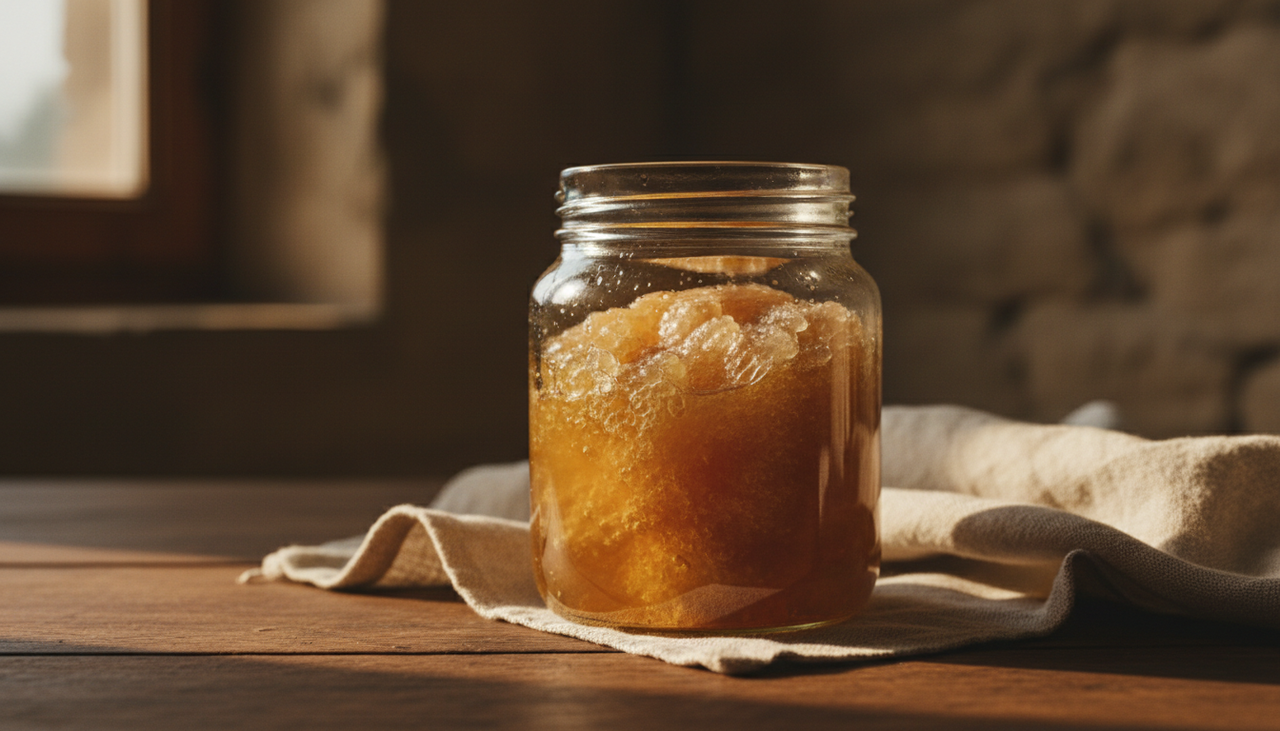
Is Your Honey Crystallising?
Don't throw it away — crystallisation is a sign of pure, natural honey. We'll show you exactly what to do.
Understanding Your Honey
What Is Crystallisation?
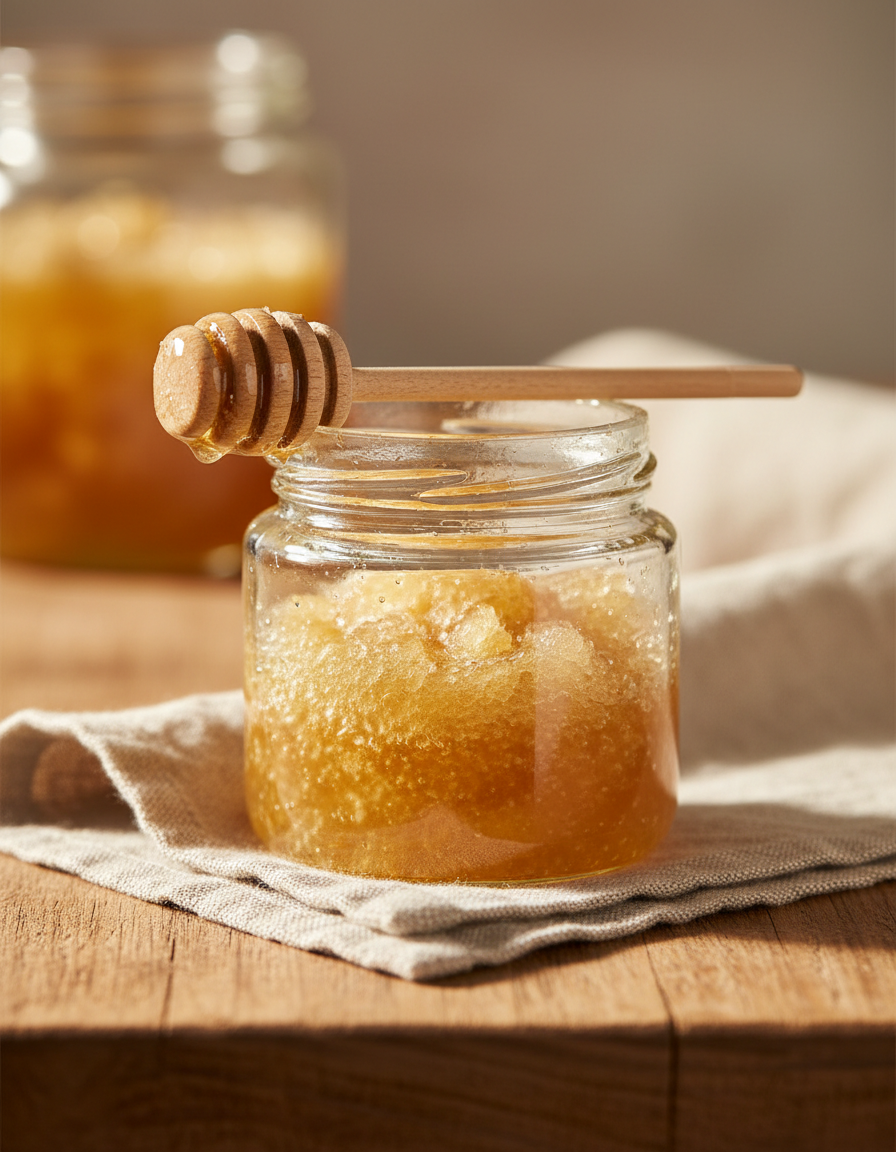
Crystallisation is a completely natural process where the glucose in honey gradually solidifies over time. Far from being a sign that something has gone wrong, it's actually a hallmark of pure, raw honey — heavily processed supermarket honey rarely crystallises because much of its natural goodness has been filtered or heat-treated away.
Every jar of real honey will eventually crystallise — it's not a defect, it's a promise of authenticity. A simple warm-water bath will return it to a liquid state without compromising any of its natural enzymes or flavour.
100% Natural
No additives, no shortcuts — just real honey from the hive.
Safe to Eat
Crystallised honey is perfectly fine to consume — same taste, same goodness.
Sign of Purity
Only raw, unprocessed honey crystallises this way over time.
The Science
Why Does Honey Crystallise?
The science is simple — and it's actually good news for honey lovers.
01
High Glucose Content
Honey naturally contains glucose and fructose. When glucose levels are high (as in raw honey), it readily separates from water and forms crystals.
02
Temperature Matters
Honey crystallises fastest between 10–15°C. Cold pantries or fridges speed up the process significantly, while warmer storage keeps it liquid for longer.
03
Particle Nucleation
Tiny pollen grains, beeswax particles, and air bubbles act as seeds — natural nucleation points where crystals form around.
Prevention Guide
How to Prevent Crystallisation
A few simple habits will keep your honey smooth and pourable for longer.
1
Store at Room Temperature
Keep your honey between 18–24°C. Avoid the fridge — cold temperatures accelerate crystallisation. A warm pantry or kitchen cupboard is ideal.
2
Keep the Lid Sealed
Moisture is crystallisation's best friend. Always close your jar tightly after use to keep humidity out and slow the process.
3
Use a Clean, Dry Spoon
Never introduce water into your honey jar. Even a slightly damp spoon can trigger early crystallisation by introducing moisture nucleation points.
4
Avoid Direct Sunlight
While warmth helps, UV light degrades honey's natural enzymes and antioxidants. Store in a dark cupboard or pantry away from windows.
5
Don't Refrigerate
The fridge is the worst place to store honey. It rapidly speeds up crystallisation and can affect texture and flavour.
De-crystallisation Methods
Restoring Your Honey
Already crystallised? No problem. Choose the method that suits you best.
Recommended
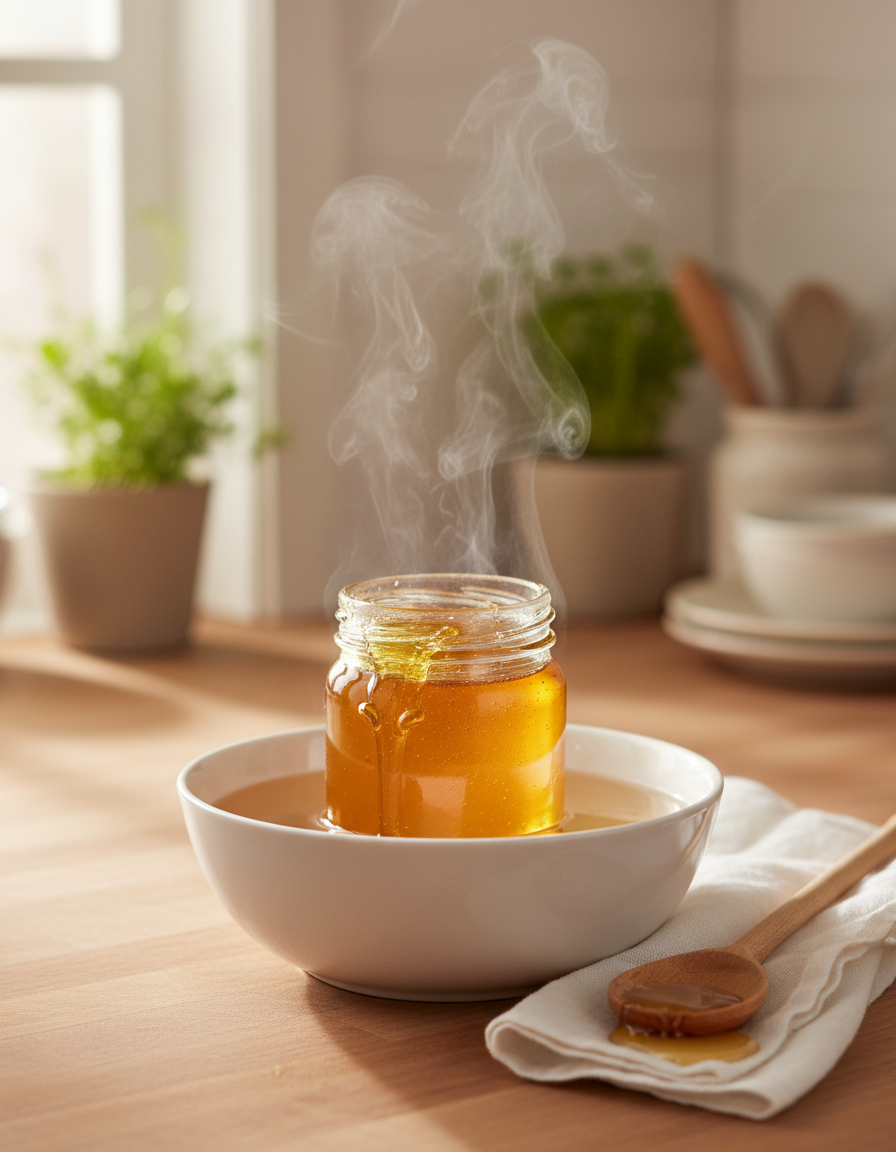
The Warm Water Bath
Place your honey jar with the lid off in a bowl of warm water — around 40°C, never boiling. Stir occasionally with a clean, dry spoon and allow 30 to 60 minutes for the crystals to dissolve evenly. This method is gentle on the honey's natural enzymes and nutrients.
Quick tip: Safe for enzymes & nutrients. Avoid water hotter than 40°C to preserve raw honey's natural properties.
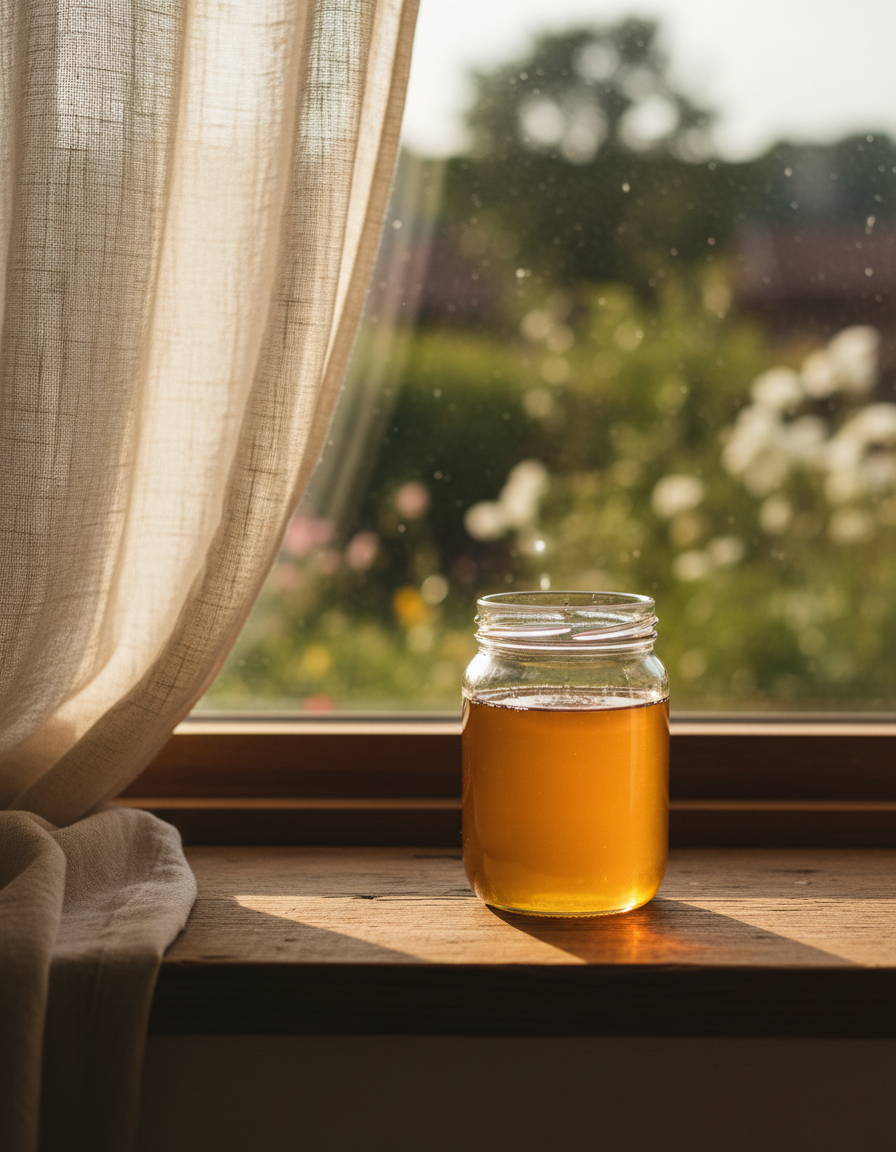
The Warm Water Method
Step-by-Step: The Warm Water Method
Our recommended method — gentle enough to preserve every enzyme and nutrient.
01
Boil, Then Let Cool
Boil a kettle and pour water into a large bowl or pot. Let it cool for 5 minutes — you want it warm, not boiling (around 40°C).
02
Remove the Lid
Remove your honey jar lid and place the jar into the warm water. Make sure water doesn't enter the jar.
03
Stir Gently
Using a clean, dry spoon, stir your honey every 10 minutes to help the crystals dissolve evenly.
04
Be Patient
Allow 30 to 60 minutes depending on how crystallised your honey is. Repeat the warm water if it cools too quickly.
05
Enjoy Your Honey
Once fully liquid, replace the lid and store at room temperature. Your honey is as good as new — and all its nutrients are intact.
A Word of Warning
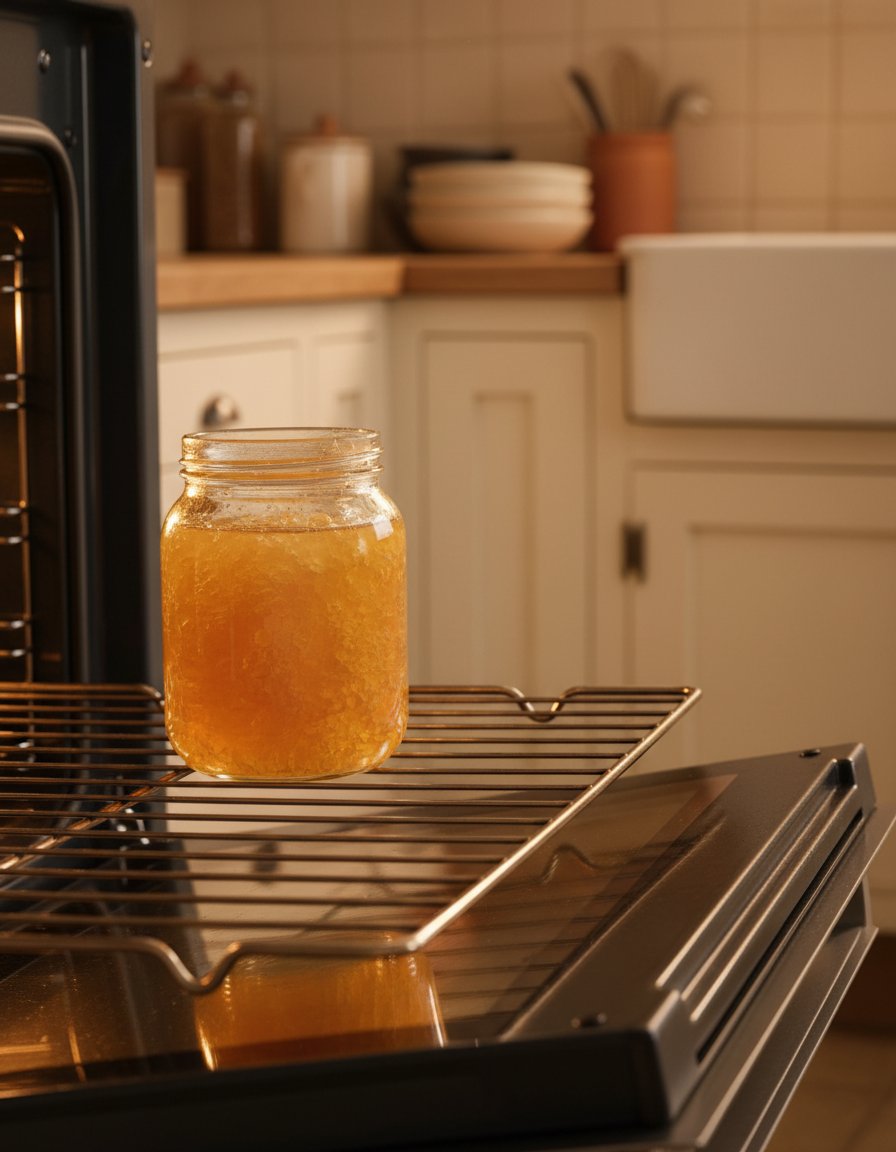
Never microwave your honey or use boiling water — high heat destroys enzymes, antioxidants, and the flavour that makes Honeycube honey special.
FAQ
Common Questions About Crystallisation
Everything you need to know about your honey.
Absolutely. Crystallised honey is just as safe and nutritious as liquid honey. The texture changes, but the flavour and health benefits remain completely intact.
Not at all. Honey is one of the few foods with an indefinite shelf life when stored correctly. Crystallisation is purely a physical change — it doesn't affect quality or safety.
It depends on the glucose-to-fructose ratio. Honeys with higher glucose content (like rapeseed or clover) crystallise faster. Honeys like Manuka or acacia, which are higher in fructose, stay liquid much longer.
Yes! Many people enjoy the texture of crystallised honey — it spreads like butter and is great on toast. You don't need to liquify it if you prefer it that way.
If done correctly — using gentle warmth below 40°C — no nutrients are lost. Avoid microwaving or boiling, which can damage enzymes and antioxidants.
Store it at room temperature in a sealed jar, away from direct sunlight and moisture. Avoid the fridge.